Common Core math · ages 5–6
Kindergarten math video lessons
Counting to 100, numbers to 20, first adding and taking away, teen numbers, measuring and shapes.
Counting & Cardinality
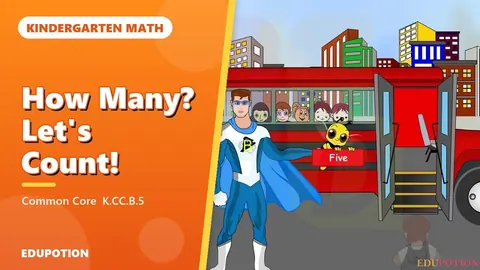
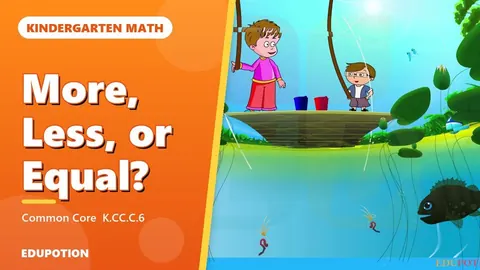
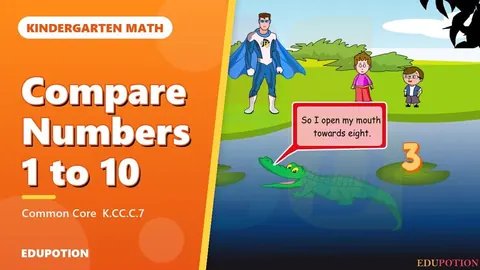
7 lessons · 18 minThe counting sequence to 100, writing numbers to 20, counting objects to tell how many, and comparing groups and numbers.
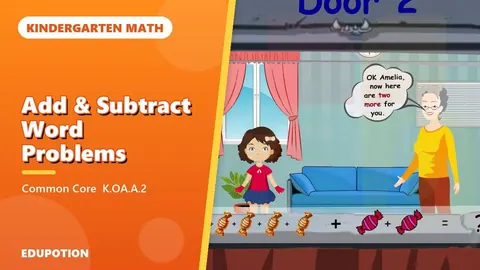
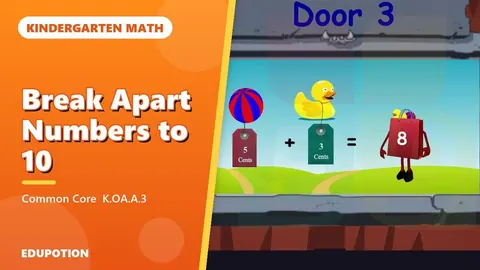
Operations & Algebraic Thinking
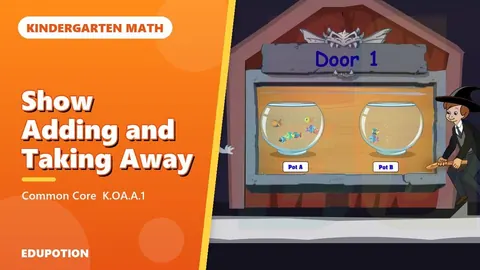
3 lessons · 7 minFirst steps in addition and subtraction: putting together, taking apart and story problems within 10.
Number & Operations in Base Ten
1 lesson · 4 minTeen numbers as ten ones and some more ones - the foundation of place value.

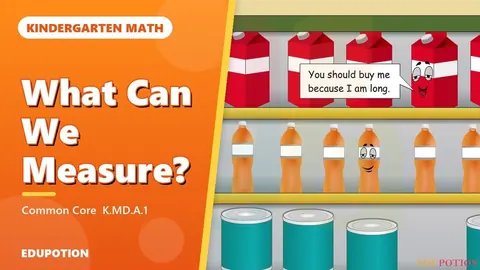
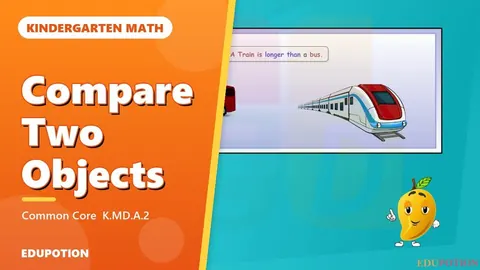
Measurement & Data
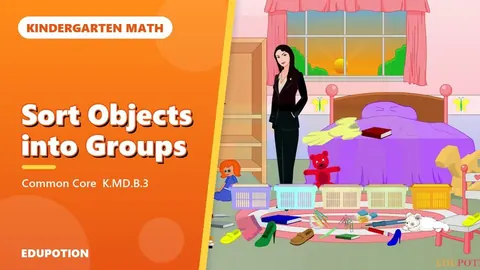
3 lessons · 9 minDescribing and comparing things that can be measured, and sorting objects into groups.
Geometry
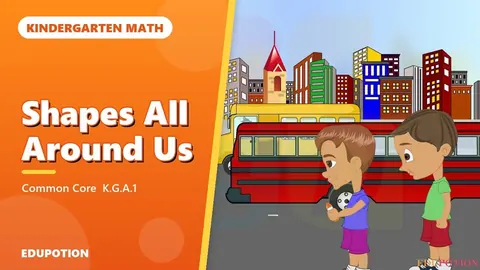
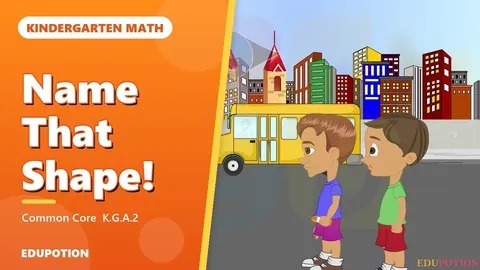
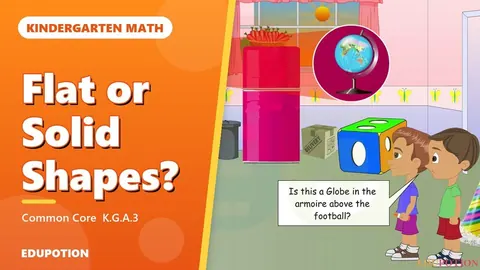
3 lessons · 6 minNaming and describing flat and solid shapes, wherever they are and however they are turned.
What Kindergarten math covers
- K.CC.A.1 Count to 100 by ones and by tens.
- K.CC.A.2 Count forward beginning from a given number within the known sequence.
- K.CC.A.3 Write numbers from 0 to 20. Represent a number of objects with a written numeral 0-20.
- K.CC.B.4 Understand the relationship between numbers and quantities; connect counting to cardinality.
- K.CC.B.5 Count to answer "how many?" questions.
- K.CC.C.6 Identify whether the number of objects in one group is greater than, less than, or equal to the number of objects in another group.
- K.CC.C.7 Compare two numbers between 1 and 10 presented as written numerals.
- K.OA.A.1 Represent addition and subtraction with objects, fingers, mental images, drawings.
- K.OA.A.2 Solve addition and subtraction word problems, and add and subtract within 10.
- K.OA.A.3 Decompose numbers less than or equal to 10 into pairs in more than one way.
- K.NBT.A.1 Compose and decompose numbers from 11 to 19 into ten ones and some further ones.
- K.MD.A.1 Describe measurable attributes of objects, such as length or weight.
- K.MD.A.2 Directly compare two objects with a measurable attribute in common.
- K.MD.B.3 Classify objects into given categories.
- K.G.A.1 Describe objects in the environment using names of shapes.
- K.G.A.2 Correctly name shapes regardless of their orientations or overall size.
- K.G.A.3 Identify shapes as two-dimensional (lying in a plane, "flat") or three-dimensional ("solid").
Standards in short form. See the full Common Core Kindergarten math standards.